

In India, the solar energy industry has seen rapid growth, especially in the past ten years.
Rising electricity bills, along with a need for clean energy, have made solar attractive to a number of businesses, industries, and even residential societies.
However, sometimes the high upfront cost of solar installation presents an obstacle.
This is where a Solar Power Purchase Agreement (PPA) offers a clever and cost-effective solution.

A Power Purchase Agreement is an arrangement by which a developer installs, owns, and operates a solar power system either on the customer's premises or at a remote location, while the customer agrees at a later stage to purchase the electricity from the system at a price mutually agreed upon for a specified period, which usually ranges from 10 to 25 years.
The greatest advantage of a Power Purchase Agreement is that the customer pays nothing upfront for the solar panels or installation.
For large electricity consumers like factories, commercial buildings, hospitals, and institutions, this is a good setup.
Under the Power Purchase Agreement, the solar provider handles everything from site assessment, system design, procurement, and installation through operation and maintenance.
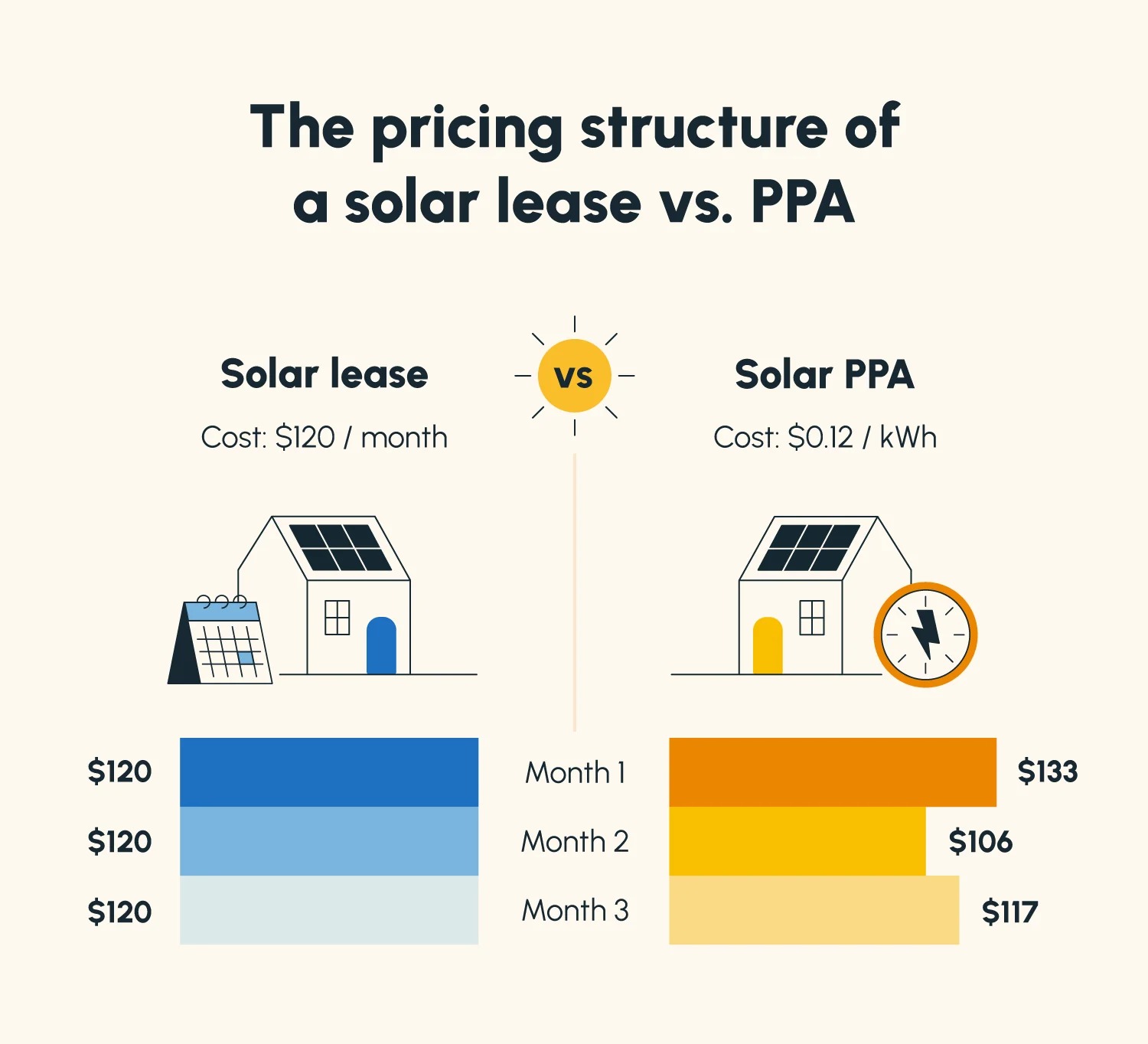
The customer then pays only for the electricity produced, often at a rate lower than the local utilities' tariff.
A Power Purchase Agreement works like this: To start, experts do a thorough energy check to figure out how much power the customer needs.
Using this info, the solar EPC (Engineering, Procurement, and Construction) team creates a solar setup just for them. After they set up and turn on the system, the customer starts getting clean solar power.
They get a bill each month for the electricity they use similar to a regular power bill, but often at a lower price. This leads to big savings over time.

Power Purchase Agreements have a big plus: customers don't need to put up money upfront.
Companies can keep their cash for their main business instead of buying solar gear.
Also, they don't have to worry about keeping the system running - the solar company takes care of that, and they're better at it.
What's more, PPAs work on how well the system performs.
This means the solar company wants to keep everything running for the whole time of the deal.
If the system doesn't work well, the company doesn't get paid.
This setup makes sure the customer gets the most out of their solar power without the risks that come with owning the system themselves.
A Power Purchase Agreement offers another advantage: stable pricing.
While traditional electricity rates tend to climb each year, a PPA locks in the price or increases it by a set percentage.
This helps customers better plan their energy expenses over time. Companies and institutions that use a lot of power find this useful.
PPAs also help meet green targets. When organizations opt for solar through a Power Purchase Agreement, they cut their carbon output and show they care about clean energy.
This can boost their ESG (Environmental, Social, and Governance) scores and make their brand look better.

Keep in mind that PPAs come in different forms.
You can have on-site PPAs where the system sits on the customer's property, or off-site PPAs where the solar farm is elsewhere and sends power through the grid.
Both types of Power Purchase Agreement give customers access to solar energy at good rates, without having to own the equipment.
In India, demand for power procurement agreements is increasing, especially in solar -friendly states with strong policies and encouragement.
Companies are proceeding by offering flexible and transparent PPA models for a wide range of customers, from industrial parks to office complexes.
Finally, a power purchase agreement is a practical and cost -effective way to go on solar without the problem of ownership.
It helps reduce the cost of electricity, supports green energy goals, and provides long -term energy security.
For any business or institute looking to adopt solar energy, searching PPA with a reliable solar partner is a smart first step.